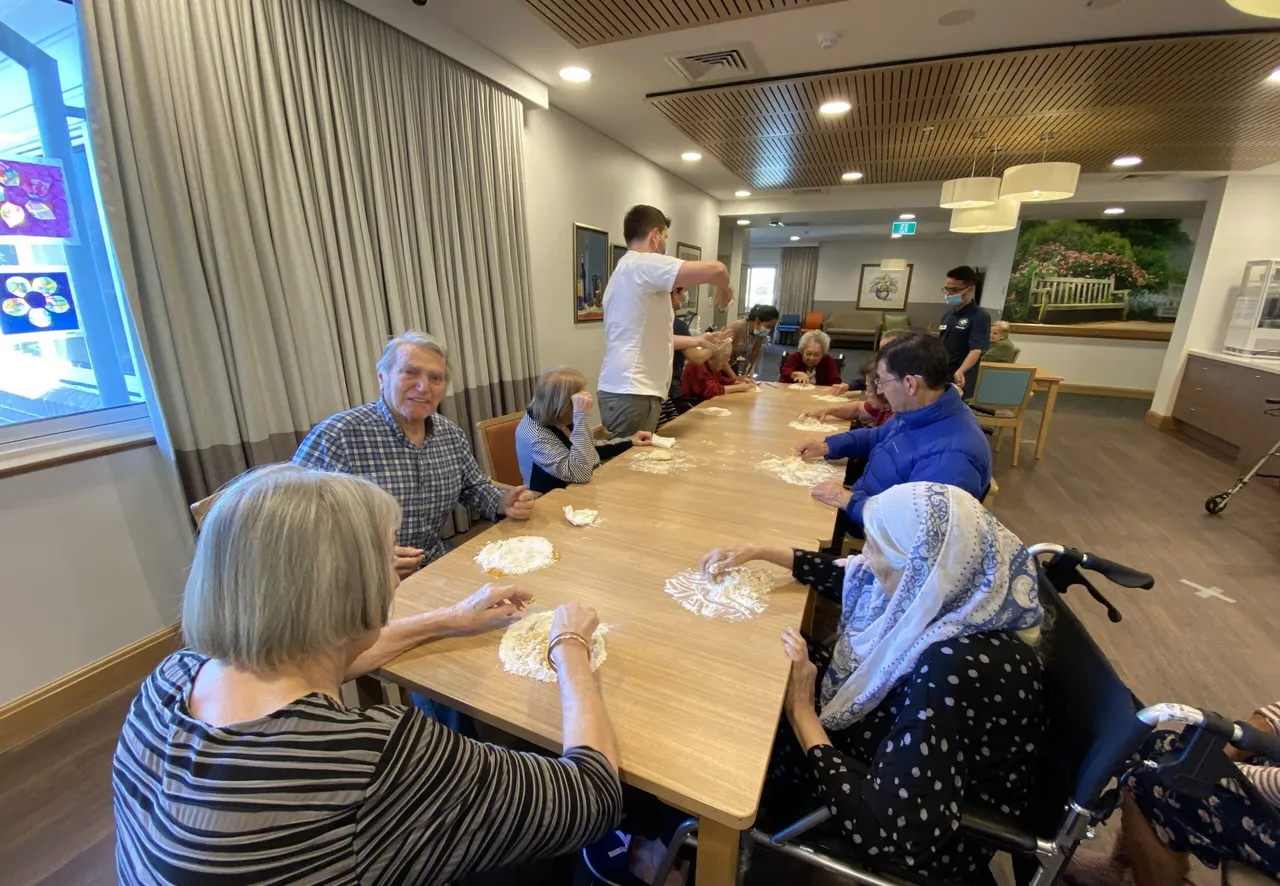
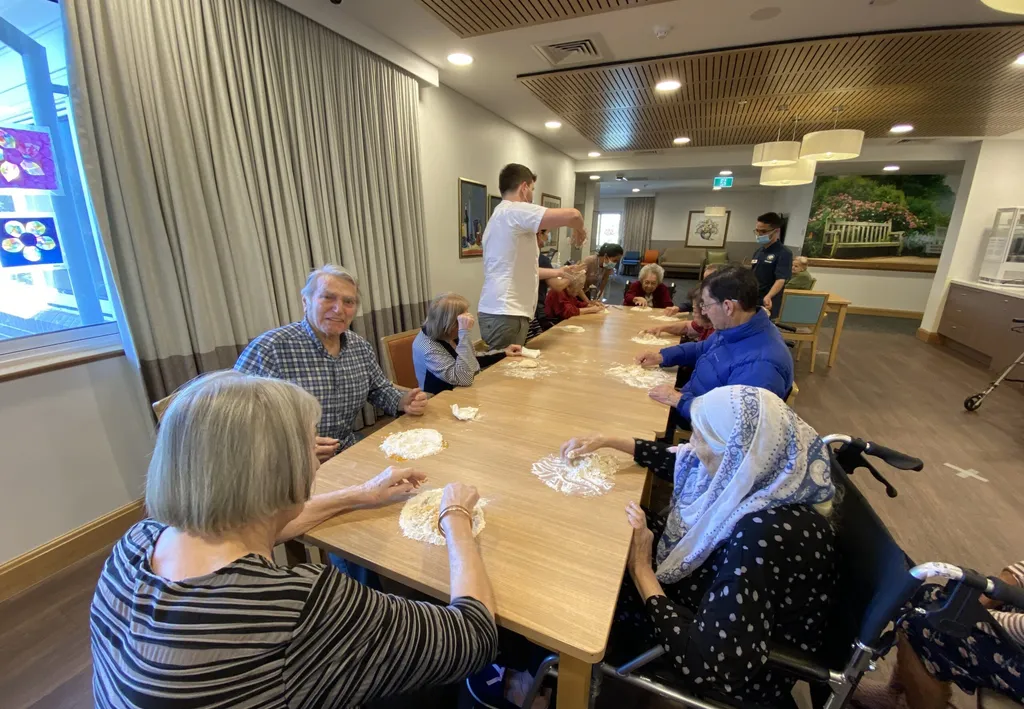
Aaron attended one of our Masterclasses and recently shared details of this fun activity he undertook with his residents.
Helping residents live life to the best of their ability is the mantra at Moran Aged Care. When the team at Moran Kellyville presented in house Chef Aaron Dempsey with the challenge of creating a fun experience for residents, he knew exactly what he would do with the group who are also living with dementia. As many of the participants were of Italian origin Aaron decided to call on their memories and cultural background with a hands-on pasta making session.
Said Aaron, “The making of homemade pasta is a satisfyingly precise ritual, which is steeped in old family traditions and culture. My goal was to help residents reminisce and connect through the physical activity of creating food. During our session many residents recalled memories of gathering around the kitchen to prepare food for their families.” There are multiple benefits of an activity like making pasta including:
- Improving Dexterity – by putting your hands in the dough, feeling it with your fingers, kneading it, making it nice and thin and giving it shape a very tactile experience is created, improving dexterity and hand muscle strength.
- Enhancing Independence - By improving our fine motor skills we enhance independence. Stronger hand muscles help to prolong the use of cutlery, hold cups, glasses even brushing teeth.
- Sensory Stimulation - Feeling and working the dough is satisfying and stimulates sensations surrounding joints and muscles which brings awareness of the body.
- Connecting – Food is an important part of culture and acts as an expression of cultural identity for many. By sharing and experiencing pasta making individuals who sometimes find it hard to connect or engage found a common bond and joy through this activity.
- Reminiscence – typically a person living with dementia is more able to recall things from many years ago rather than recent memories. An activity which draws on cultural, sensory and physical stimulation is the perfect way to create reminiscence.


